From Unmissable to Unskippable
The side effects of a business model.
In 2020 alone, Netflix produced 124 fiction features, 62 in languages other than English, and 34 feature-length documentaries, more than any other studio in operation. If its ambition really is to kill cinema, as a growing number of film critics and cinephiles seem to believe, it is doing a remarkably half-arsed job of it, at least for the time being: the first shovelful of earth is still a long way from hitting the coffin.
Through Netflix, viewers in 203.65 million households worldwide have access to the 3,781 titles in the American streaming platform’s catalogue (plus an additional 1,940 television series). The only platform with a more generous selection of feature films is Prime Video, with 12,828 titles available (when it comes to series, Netflix is the runaway leader). Factor in the price of a subscription—between €7.99 and €11.99 a month in Romania—and we are clearly dealing with an unprecedented form of democratisation, at least as far as the legal consumption of film and television is concerned. So when it comes to not just production, but also consumption, streaming platforms are doing less than great. If they keep up like this, cinema is still a really long way from breathing its last.
According to a December 2018 study by the US National Association of Theatre Owners, streaming Stakhanovites choose the cinema as a leisure activity more often than occasional users do. While most respondents who spent an average of seven hours a week on streaming platforms had been to the cinema once or twice over the previous year, most of those clocking eleven hours had seen films outside of their home at least nine times. The great wholesale migration online, bag and baggage, has yet to materialise. And if Netflix really is standing over cinema’s coffin with a fistful of nails, it has yet to muster the courage to start hammering them in.
That does not mean that, merely because Netflix is not killing cinema, cinema is free to go serenely about its business. The fact that we have more films than ever before, cheaper than ever before and closer at hand than ever before turns film—any film—into just another commodity, scarcely distinguishable from the many other goods we pay for, have delivered to our door and consume. Netflix’s positioning: films, and truckloads of it. As subscribers, we are lords and masters of these films-turned-products, regardless of what we choose to do with them. Whether we watch them or not, one thing is certain: we own them, in a way we could never own a film projected onto a screen that wasn’t ours.
Like landed gentry, we stuff ourselves with everything we can grab, from trending series to the latest films by Scorsese, Cuarón or Charlie Kaufman. The objects of an obvious attempt at legitimacy by association, the latter consecrate the marriage of patronage and mercenary work, if we are to take Spielberg at his word. Have Scorsese, Cuarón and Kaufman truly betrayed the righteous cause, forcing us to exchange the thrill of the lights going down in a cinema for the vulgar press of a button? The answer is yes only if we envisage cinema as something other than what it is: a living body, in constant dialogue with all the other organisms, material and otherwise, that populate our world. Personally, I do not believe watching at home can equal the experience of watching a film on a cinema screen, nor do I regard the former as a species of plebeianism. Shaming people who choose to watch at least some of their films on a television screen therefore strikes me as misguided, if not hypocritical.
Yes, we watch films at home. More and more of them. But the question is not whether this is inherently a bad thing. The more pressing question is what the mutations undergone by the films we watch—whether produced by Netflix or not—look like and entail, as these films compete with television series, YouTube, TikTok and Instagram videos, all the other screens populating our lives, not to mention our own physiological needs. A few years ago, at the 2018 of the Divan Film Festival, halfway through a film that, as curator, I thought was quite a catch, I was outraged to see a sizeable number of spectators—some of them filmmakers themselves—take out their phones and begin methodically inspecting their Facebook feeds. I have since resigned myself to it. This is probably how things will be from now on, and we might as well get used to the pillars of light that have punctuated cinema auditoriums ever since phones lost their buttons.
Netflix, on the other hand, has not resigned itself to anything. It knows perfectly well that the hand reaching for the pocket and the finger afflicted with scrollitis affect a sizeable portion of the population. It knows that we left the age of the unmissable—the film everybody wants to see—and now live under the full-blown reign of the unskippable: the five-second clip everybody is forced to see. And because Netflix knows this, Netflix takes action.
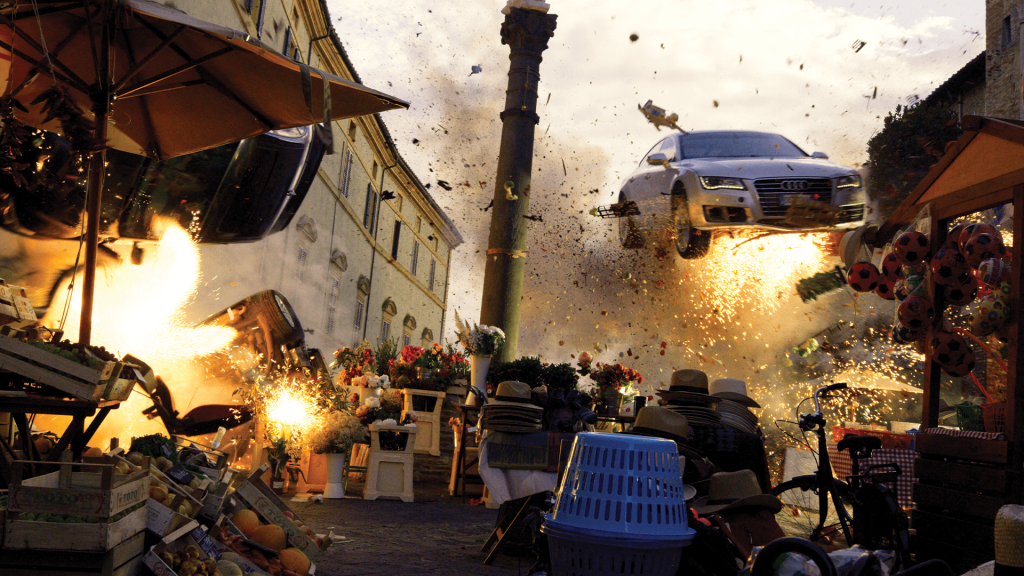
Among the platform’s ten most-watched films are Extraction (No. 1, with 99 million views lasting at least two minutes), Bird Box (No. 2, 89 million views), 6 Underground (No. 4, 83 million), The Old Guard (No. 6, 78 million) and The Irishman (No. 10, 64 million), all Netflix originals. In every case, as a precautionary measure, we meet the hero somewhere 13 to 80 seconds after the opening shot. In every case, too, the protagonist (or co-protagonist, in the case of The Irishman) dies, is about to die, or speaks about his own death as though it had already happened. This opening flash-forward performs the function of the preview at the end of any episode of a TV series—which is, after all, the kingdom where Netflix reigns supreme. We now know what will happen “in the next episode”. Before the first minute is out, the bait has been cast, and we have already been trained to keep watching.
In all these cases, the protagonist is betrayed by one of his close associates. Finally, with the exception of The Irishman, all these heroes suffer from emotional trauma: the death of a child in Extraction, witnessing a massacre in 6 Underground, an abusive father in Bird Box, the loss of a loved one in The Old Guard. The hero’s mission is therefore twofold: rescue a hostage, make an example of a dictator and so on, while also tending to their own emotional wounds. Beyond all doubt, it is clear that putting a bullet through the right head instantly undoes the consequences of past emotional shock as well. A simple world, where you know from the outset who does what, where curiosity is triggered mechanically and the risk of fast-forwarding through the film—or dropping it altogether—is reduced to a minimum; a world where trauma exists, but heals without too much trouble, provided you know jiu-jitsu.
There is little room for colour in the Netflix universe. Thanks to colour grading, the North American woods where the heroine of Bird Box makes peace with herself do not look all that different from Morocco, Sudan, Afghanistan, France or England, through which Andy carries her axe in The Old Guard, while also recalling the Australia, India or Bangladesh we know from Extraction. Nor is this an isolated case. I recently binged the first season of the American version of The Killing, with steadily dwindling enthusiasm. There I discovered the same washed-out colours I knew from The Walking Dead, produced by the same AMC. Different network and brand manual, same look though.
What will the films of the future look like? “Different” is the only certain answer. Our attention spans and the average length of a shot will probably continue to influence one another and shrink in tandem; film will increasingly be a sedative first and art second; and people will go on swallowing it, anywhere and anyhow, in unhealthily large quantities. Perhaps watching a film will never again be a big deal.
Or perhaps it also comes down to us. Perhaps, like the heroes of The Old Guard or Extraction, we too could save something, even if our mission would look lousy in slow motion, choreographed to a thundering musical crescendo. In theory, at least, depending on what we buy, how many uninterrupted minutes we watch and on which screens, we might help film if not stay the same, then at least change into what we want it to be, rather than a group of men in expensive suits on the upper floors of skyscrapers.
Spoiler alert: amid all those figures, amid all those algorithms, there is still room for ourselves.
Originally published on the IQads platform in March 2021